
When Like Me For Me came about 5 years ago, we knew that multicultural books and toys existed but there was a huge niche market for these products. This is due to that fact that they are limited, poorly represented or very dear in price, especially when it came to children’s black dolls.
BLACK DOLL HISTORY
In 1918, two African American females, Evelyn Berry and Victoria Ross founded Berry & Ross, Inc., a black-owned doll company, in Harlem, New York. These two women were the first African American female large-scale manufacturers of black composition dolls. The famous black dolls were designed and made by Black women, in a factory owned and controlled by Black people. The dolls went on to be sold for 29 cents to $3.50 in large department stores in New York City, Boston, Philadelphia and even Africa. Berry & Ross, Inc., remained in business until 1929.
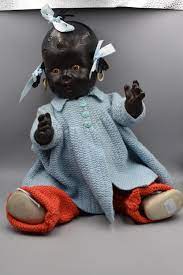
Berry & Ross advertised their dolls as “Not the old-time, black face, red lip aunt Jemima coloured dolls but dolls well made and truly representative of the race in hair and features”. This comment more than likely came about as, more often than not, black dolls were stereotypically designed; caricature-like and expressed racist undertones. Some were made with exaggerated facial features and skin tone, while others were produced to act as servants to White dolls in children’s imaginative play. For example, the pickaninny and Aunt Jemima rag doll (below).

BLACK DOLLS MAKE A DIFFERENCE
Here at Like Me For Me, we know the importance of black dolls and here are (just) 5 reasons:
1. Representation– When children play with black dolls, it normalizes the concept that humans come in all different colors and shades.
2. Celebration – Black dolls help children to celebrate their beauty and heritage.
3. Empowerment – Black dolls can leave powerful impressions on the minds of white children, black children and all children. They send a message of empowerment to the members of the black community. When black children bond with their black dolls, it creates pride in who they are. When white children make a special place in their hearts for their black dolls, it changes their bias and helps them use their privilege for good.
4. Positivity– Toys help children to build emotional connections and when they associate happiness and love with a black doll they hold that positive experience with them.
5. Awareness– Black dolls can help start conversations with children about racism. Toys can be powerful tools for combating prejudice.
PLAYING OUR PART
Like Me For Me is home to our Kamilah doll and the fashionable black Barbie doll. We will definitely be add into our collection in the near future.
Lyah’s TV is another platform which recognises the importance of black dolls and aims to promote black dolls and Black history in a super fun, inclusive and educational way.


 Like Me For Me Blog